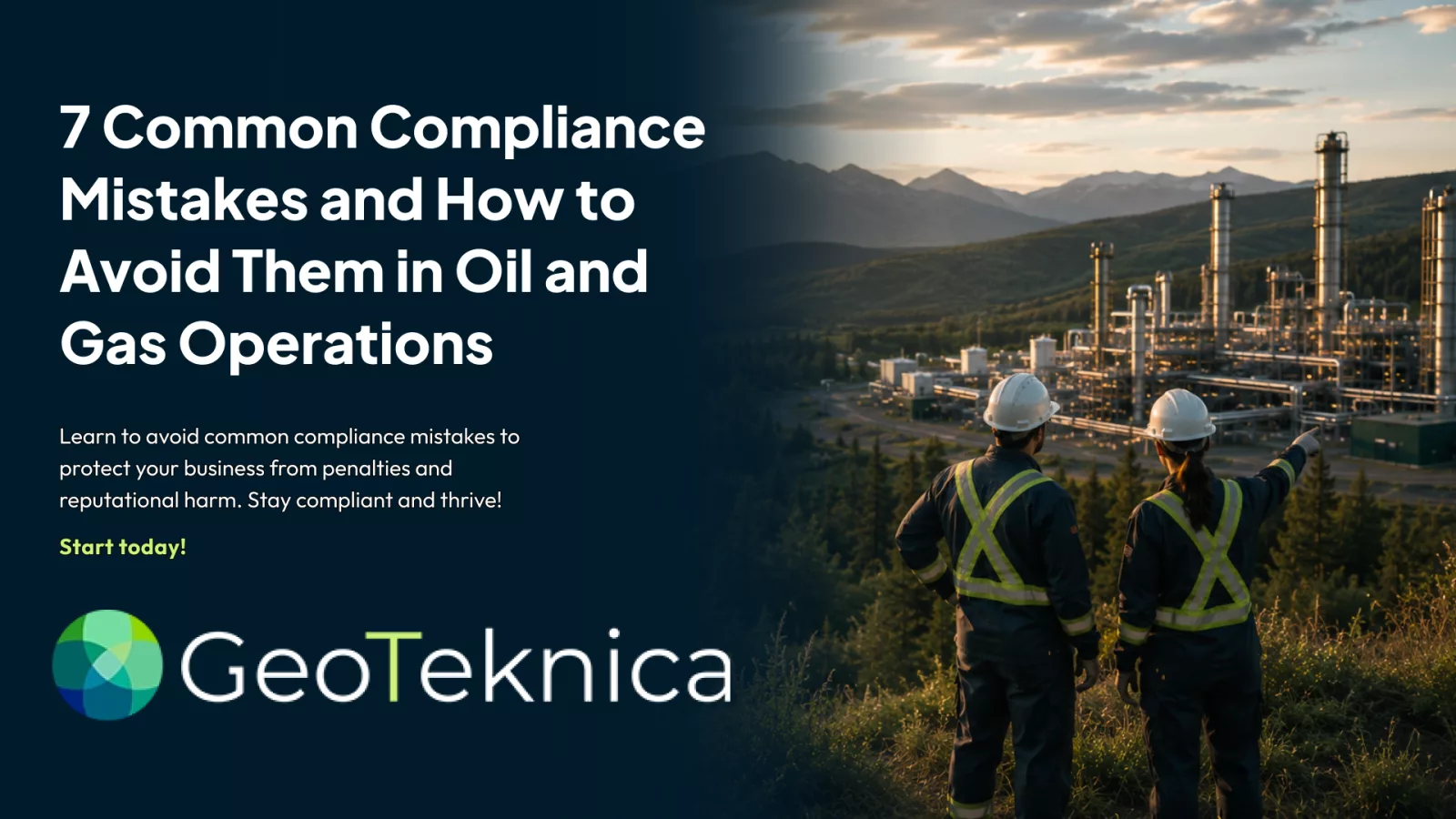
7 Common Compliance Mistakes and How to Avoid Them in Oil and Gas Operations
In oil and gas, compliance is not simply about checking a box or preparing for an audit. It is about making sure that the systems, people, equipment, and processes behind an operation are working as intended. When those elements fall out of alignment it can quickly become a operational, financial, environmental, or safety concerns.
The good news is that many causes of compliance failure are avoidable. They often come down to gaps in communication, documentation, training, monitoring, or accountability. Recognizing those gaps early can help organizations strengthen their operations before a small issue becomes a larger one.
Here are seven common compliance mistakes and practical ways to avoid them.
1. Treating Compliance as a One Time Exercise
One of the most common compliance mistakes is treating compliance as something that happens once a year, usually before an inspection or audit.
Regulatory requirements can change, operations change, equipment changes, employees and contractors change, and environmental expectations also continue to evolve. A compliance program that was effective several years ago likely does not address today’s risks.
Avoiding these oversights starts with making compliance part of everyday operations. Regular reviews, internal audits, inspections, and management checks can help identify gaps before they become serious problems. OSHA recommends a proactive and ongoing approach to identifying and assessing workplace hazards rather than relying solely on periodic checks (Occupational Safety and Health Administration [OSHA], n.d.).
2. Failing to Keep Training Current
Training is another area where compliance mistakes can have significant consequences. Employees need to understand not only what procedures exist, but why those procedures matter and what to do when conditions change.
This is particularly important in oil and gas, where workers can encounter complex and changing operating conditions. OSHA identifies education and training as key components of an effective safety and health program, noting that workers should understand workplace hazards, how to identify them, and how to control them (OSHA, n.d.).
Outdated training can create compliance mistakes even when written procedures are technically correct. Companies should review training requirements regularly, provide refresher training where appropriate, and make sure contractors receive the information they need to perform their work safely and responsibly.
3. Underestimating Documentation
Documentation may not be the most exciting part of compliance, but poor records are behind many compliance failures.
If an organization cannot demonstrate what was inspected, when training occurred, how an issue was addressed, or what corrective action was taken, it can be difficult to demonstrate that the appropriate controls were actually in place.
Good documentation creates a clear record of how an organization manages its responsibilities. This becomes especially important for environmental monitoring and emissions reporting. For example, the U.S. Environmental Protection Agency’s Greenhouse Gas Reporting Program requires applicable oil and gas operators to collect greenhouse gas data, calculate emissions, and follow specified procedures for quality assurance, missing data, recordkeeping, and reporting (U.S. Environmental Protection Agency [EPA], 2026).
Avoiding documentation related compliance mistakes means making records accurate, accessible, consistent, and easy to verify.
4. Overlooking Contractors
Oil and gas operations frequently involve multiple contractors, service providers, and other third parties. That makes contractor management an important part of preventing compliance mistakes.
A company’s standards should not stop at its own employees. Contractors need to understand applicable site requirements, safety expectations, environmental procedures, and reporting responsibilities.
OSHA emphasizes the importance of communication and coordination among employers, contractors, subcontractors, and other workers at multiemployer worksites (OSHA, n.d.). Bringing contractors into the compliance process from the beginning can help ensure that expectations are understood before work starts rather than after an issue occurs.
Clear expectations at the beginning of a project can prevent oversights later.
5. Focusing on Regulations Instead of Risk
Another common compliance mistake is focusing so heavily on meeting the minimum regulatory requirement that broader operational risks are overlooked.
Regulations provide an important baseline, but responsible organizations should also consider what could go wrong beyond the exact wording of a regulation. Could an equipment failure result in an environmental release? Could a process change introduce a new worker hazard? Could better monitoring identify a problem earlier?
This broader perspective is particularly relevant when considering environmental performance. The EPA notes that greenhouse gas data collected through its reporting program can help businesses identify opportunities to reduce pollution, minimize wasted energy, and save money (EPA, 2026).
Avoiding compliance mistakes means looking beyond the checklist and asking whether the controls actually work.
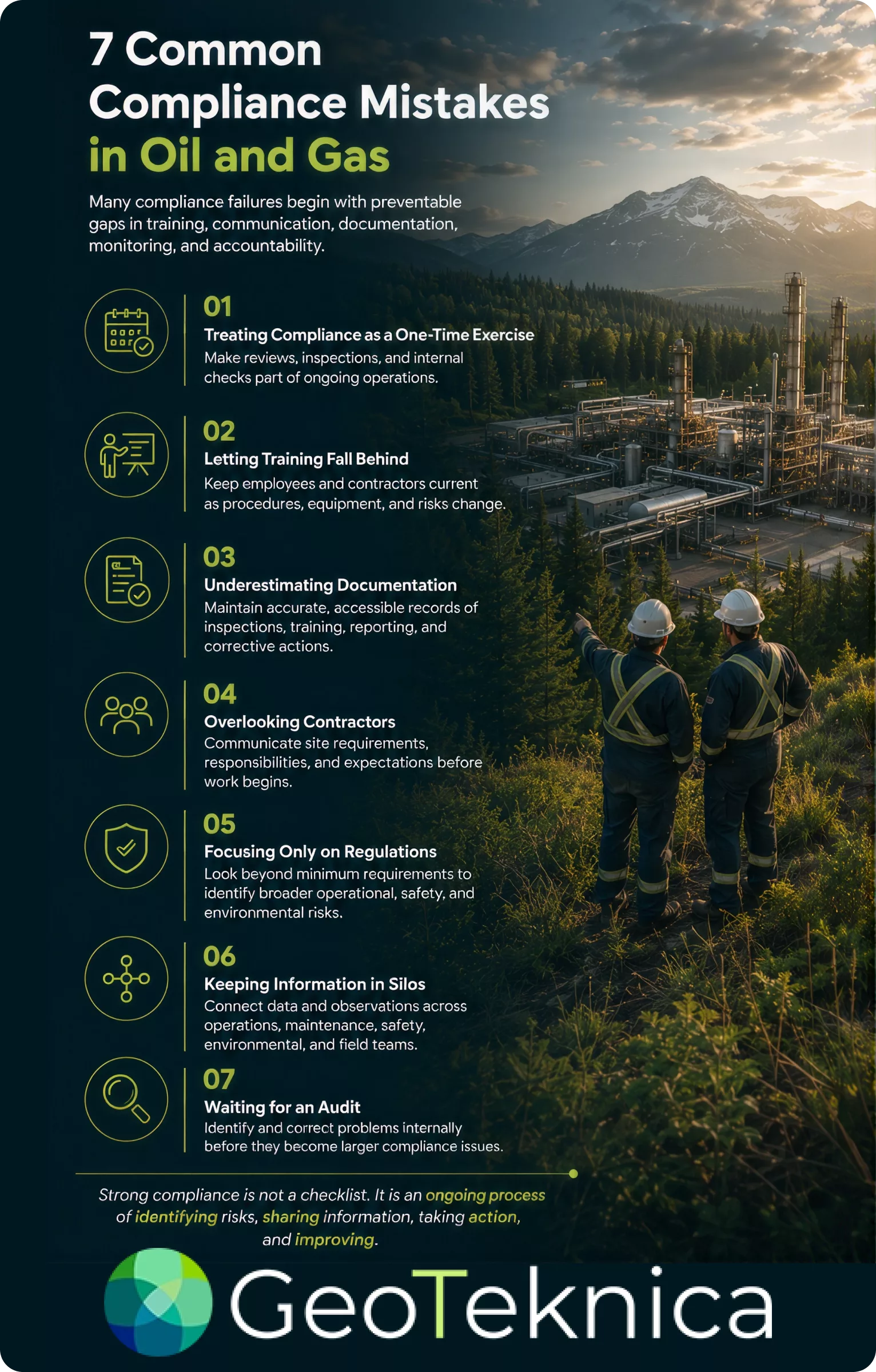
6. Keeping Compliance Information in Silos
Its easy miss information when important data is scattered across departments.
Operations may have information that environmental teams need. Maintenance may identify equipment issues that affect safety. Field personnel may notice a recurring problem before it appears in a formal report.
A strong compliance program connects these pieces of information. Technology can help by bringing inspections, training records, corrective actions, monitoring data, and reporting into a more centralized system.
This does not mean technology eliminates compliance mistakes. It means organizations have better tools to identify trends, assign responsibility, and act on information sooner.
The same principle applies to environmental data. Effective reporting depends on collecting reliable information and maintaining appropriate quality assurance, recordkeeping, and reporting processes (EPA, 2026). This is discussed in detail within GeoTeknicas Transforming Environmental Data into Strategic Insights.
7. Waiting for an Audit to Find the Problem
Perhaps the most costly approach to compliance is waiting for someone else to identify the problem.
Internal audits, inspections, reporting systems, and regular management reviews can help organizations find compliance mistakes while they are still manageable. OSHA identifies management leadership, worker participation, hazard identification, training, and ongoing program evaluation as important elements of an effective safety and health program (OSHA, 2016).
Just as importantly, workers should have meaningful opportunities to identify and report concerns. Workers are often in the best position to recognize hazards and operational issues because they interact with equipment and processes firsthand (OSHA, n.d.).
The goal is not to create a culture where people are afraid of making mistakes. It is to create a culture where people are comfortable identifying them.
Turning Compliance Into Continuous Improvement
Compliance mistakes will never be eliminated entirely. What organizations can control is how quickly they identify, understand, and correct them.
For oil and gas companies, effective compliance can support more than regulatory performance. It can contribute to safer workplaces, stronger environmental management, more reliable operations, and better decision making.
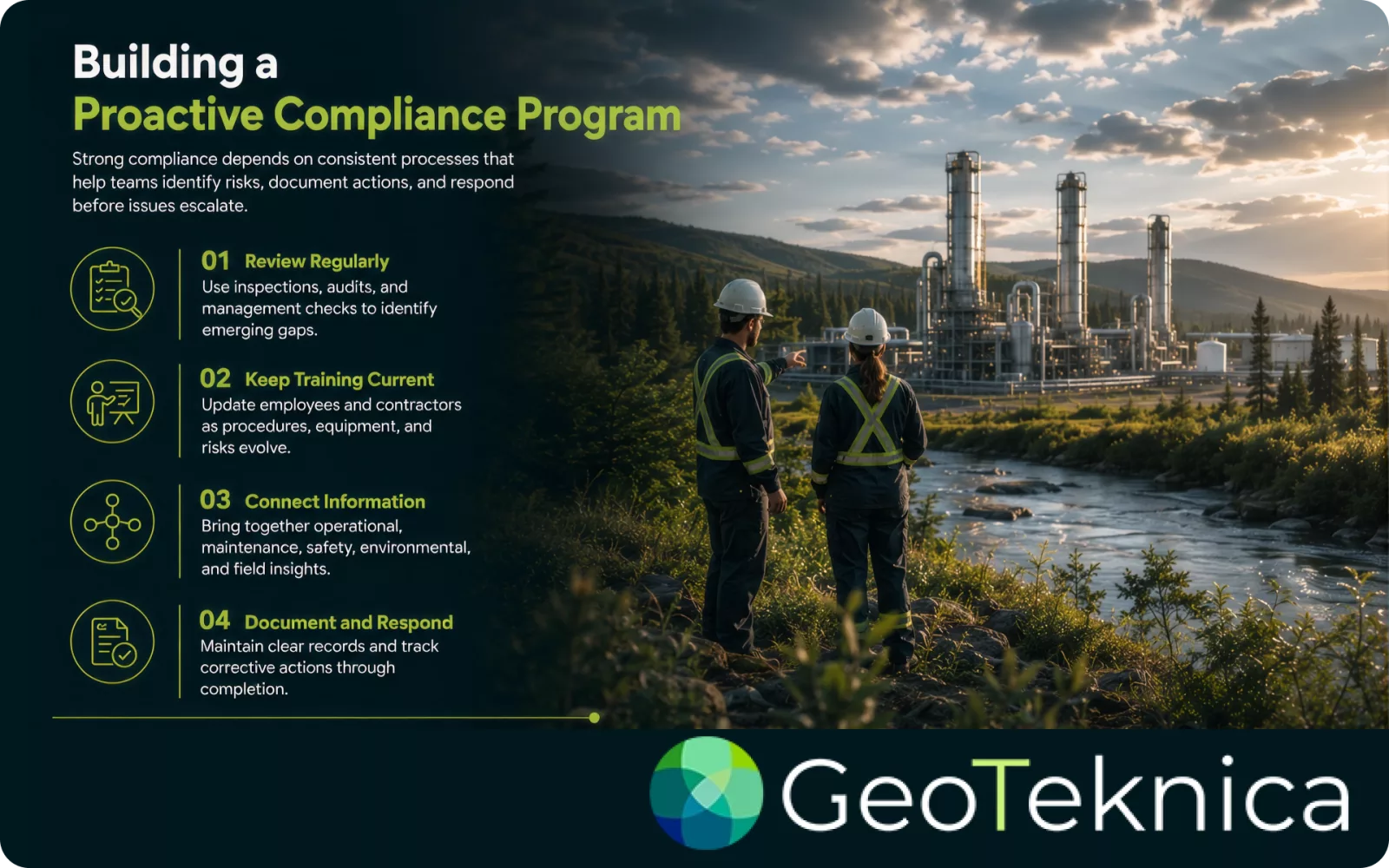
The organizations that manage compliance well are not necessarily the ones with the longest checklists. They are the ones that build compliance into how work is planned, performed, monitored, and improved.
By treating compliance as an ongoing operational responsibility rather than a one time requirement, companies can reduce mistakes, strengthen accountability, and build systems that are prepared for both today’s expectations and tomorrow’s challenges.
References
Occupational Safety and Health Administration. (2016). Recommended practices for safety and health programs. U.S. Department of Labor. https://www.osha.gov/sites/default/files/publications/OSHA3885.pdf
Occupational Safety and Health Administration. (n.d.). Education and training. U.S. Department of Labor. https://www.osha.gov/safety-management/education-training
Occupational Safety and Health Administration. (n.d.). Worker participation. U.S. Department of Labor. https://www.osha.gov/safety-management/worker-participation
U.S. Environmental Protection Agency. (2026). GHGRP and the oil and gas industry. https://www.epa.gov/ghgreporting/ghgrp-and-oil-and-gas-industry
GeoTeknica. (2026). Transforming environmental data into strategic insights. https://geoteknica.com/blog/environmental-data-insights/
7 Common Compliance Mistakes and How to Avoid Them in Oil and Gas Operations